
Posts Categories
Latest Posts
ADDIS ABABA, Ethiopia, October 15, 2026 – As African countries work to develop a common response to climate-induced migration, Liberia is urging the continent to pay closer attention to the growing pressure that population movements can place on forests, agricultural land, and vulnerable communities.
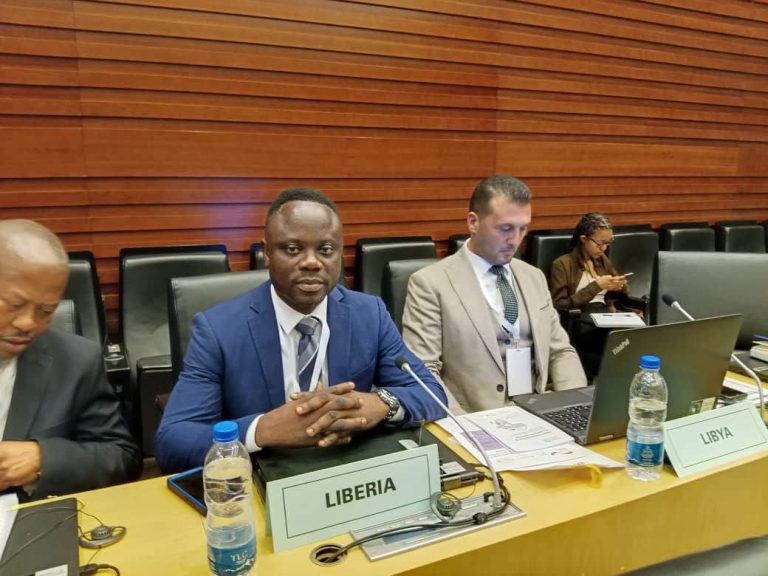
Leading Liberia’s voice in the discussions was Desmond T. Thompson, Project Liaison Officer and GEF Alternate Focal Point at the Environmental Protection Agency of Liberia (EPA), who represented the country at the African Union’s Final Consultation and Validation Meeting on the Draft Continental Strategy and Action Plan on Migration and Climate Change.
The meeting, held October 14–15, 2026, at the African Union Headquarters in Addis Ababa, Ethiopia, was organized by the African Union Commission in collaboration with GIZ to review and validate a continental framework for addressing the relationship between climate change and human mobility.
During the technical and plenary sessions, Mr. Thompson highlighted Liberia’s experience with climate-related migration and the environmental challenges that can arise when communities move in response to changing weather conditions and declining livelihood opportunities.
He explained that climate change is creating pressures that extend beyond national borders, while also forcing people within countries to leave areas affected by flooding, extreme heat, prolonged dry spells, and erratic rainfall.
For Liberia, he stressed, these movements raise important questions about how the country manages its land, protects its forests, and prepares local authorities and communities to respond to changing population patterns.
Mr. Thompson drew attention to concerns emerging from southeastern Liberia, where findings from the recent nationwide tour of EPA Executive Director Dr. Emmanuel K. Urey Yarkpawolo highlighted an increased presence of foreign nationals, including Burkinabè, engaged in cocoa farming and other land-use activities.
He noted that such developments require effective monitoring, appropriate land-use planning, and stronger coordination among institutions responsible for environmental protection, agriculture, migration, and local governance.
His intervention emphasized that climate-related migration must be addressed through policies that recognize both the needs of people on the move and the responsibility of governments to protect natural resources.
“Climate change is not only an environmental issue; it is also a development and governance challenge,” was the central message of Liberia’s contribution to the discussions.
Mr. Thompson welcomed the draft African Union strategy, describing it as an important opportunity for countries to develop a common framework for responding to climate-related human mobility rather than relying on fragmented national measures.
He called for stronger coordination among African governments and encouraged the integration of climate migration considerations into national development plans, public budgets, environmental policies, and land-management systems.
He also stressed that the proposed strategy should lead to practical interventions instead of remaining a policy document without meaningful implementation.
According to Mr. Thompson, African countries must begin addressing these challenges with the resources and institutions available to them while continuing to advocate for greater international climate finance and technical support.
The two-day meeting provided African Union member states and partners with an opportunity to review strategic priorities, discuss implementation arrangements, and consider the way forward for adoption and dissemination of the continental framework.
Following the consultations, the EPA plans to brief national stakeholders on the meeting’s outcomes and explore opportunities to integrate the strategy into Liberia’s climate policies, migration frameworks, land-use planning, and development programs.