
MONROVIA, August 10, 2026 — Liberia has intensified efforts to understand and address the growing impact of climate change on where and how people live, work and move, with the Environmental Protection Agency (EPA) leading a national consultation on climate mobility.
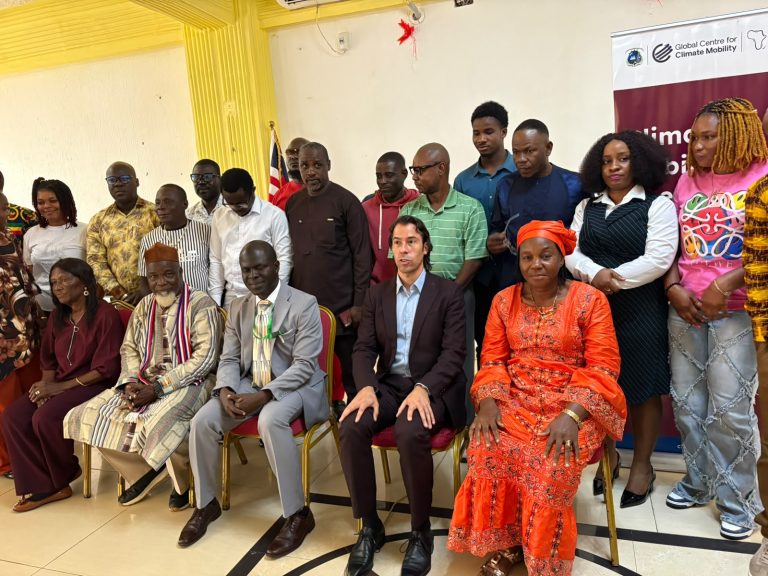
The Climate Mobility Deep Dive Consultation Workshop, held Monday, August 10, 2026 at the Corina Hotel in Sinkor, brought together representatives from Montserrado, Margibi, Grand Bassa and Rivercess Counties, government ministries and agencies, development partners, traditional leaders, civil society organizations, women and youth groups, and other stakeholders.
The consultation is part of a broader national process aimed at generating evidence and practical recommendations to help Liberia respond to the increasing links between climate change and human movement.
Climate mobility refers to the movement of people that is influenced by the effects of climate change and climate-related hazards. It can take different forms, including displacement, when people are forced to leave their homes because of events such as floods or coastal erosion; migration, when people move temporarily or permanently in search of safer living conditions or livelihoods; and planned relocation, when communities are deliberately moved to safer areas because their original locations have become increasingly vulnerable.
In Liberia, climate-related mobility could become more significant as communities face flooding, coastal erosion, changing rainfall patterns, prolonged dry seasons, land degradation and other environmental pressures.
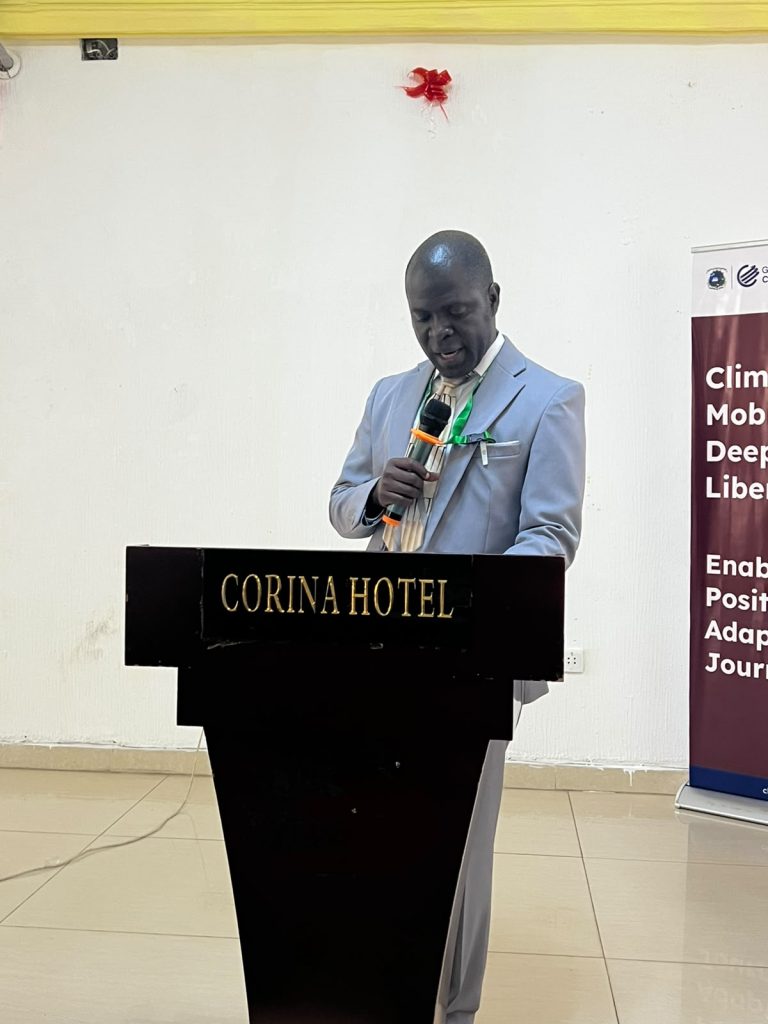
Opening Monday’s workshop, EPA Executive Director and CEO Dr. Emmanuel King Urey Yarkpawolo said climate change is no longer a distant threat but a reality already affecting communities across Liberia.
He said climate-related hazards are affecting livelihoods, food security, water resources, infrastructure and public health, while also influencing where and how people live and work.
“Climate mobility is therefore emerging as an important development and policy issue,” Dr. Yarkpawolo said.
He stressed that understanding these movements is essential if Liberia is to develop policies that protect vulnerable populations, strengthen community resilience and promote sustainable development.
A major focus of the consultation is ensuring that Liberia’s response to climate mobility is informed by the experiences of communities directly affected by climate change.
Dr. Yarkpawolo said policymakers must listen to communities and ensure their experiences become part of national decision-making.
“Their lived experiences must guide our policy responses,” he said.
He explained that climate mobility cannot be treated as an environmental issue alone. It requires coordination across agriculture, land governance, disaster risk management, infrastructure, urban planning, health, social protection, security and local governance.
The EPA chief therefore called for a whole-of-government and whole-of-society approach to addressing climate mobility.
The Monrovia workshop is the third Climate Mobility Deep Dive Consultation organized by the EPA in collaboration with the Global Center for Climate Mobility (GCCM).
The process began on August 5 in Ganta City, with representatives from Lofa, Bong, Nimba and Grand Gedeh Counties participating in the first regional consultation.
The second consultation was held on August 7 in Harper, bringing together representatives from Maryland, River Gee, Sinoe and Grand Kru Counties.
The Monrovia consultation covers Montserrado, Margibi, Grand Bassa and Rivercess Counties.
The regional consultations will culminate in a high-level national dialogue on August 11 in Monrovia, bringing together policymakers from government ministries, agencies and commissions, development partners, civil society, women and youth representatives, the private sector and academia.
The EPA says findings from the consultations will help generate evidence and recommendations to inform national planning, including implementation of Liberia’s National Adaptation Plan, Nationally Determined Contribution 3.0, National Disaster Risk Reduction Strategy, and broader priorities under the ARREST Agenda for Inclusive Development.
Dr. Yarkpawolo said incorporating climate mobility into national planning would help Liberia develop responses that are not only focused on reacting to displacement after it happens, but also on anticipating risks, strengthening resilience and protecting vulnerable communities.
Liberia’s current climate mobility initiative builds on a partnership between the Government of Liberia and the Global Center for Climate Mobility.
Dr. Yarkpawolo recalled that Liberia signed a Memorandum of Understanding with the GCCM in 2025 during the Climate Mobility Forum in Berlin, Germany, to strengthen cooperation on climate mobility.
He described the ongoing Deep Dive consultations as a direct response to that agreement and an important step toward transforming the partnership into evidence, policy and action.
Through the collaboration, Liberia is seeking to strengthen its capacity to integrate climate mobility into national climate and development policies while ensuring that adaptation measures remain people-centered, rights-based and responsive to vulnerable communities.
Dr. Yarkpawolo emphasized that climate mobility is ultimately about more than people moving from one location to another.
He urged participants to use the consultation to openly share experiences, identify challenges and propose practical solutions that can strengthen resilience across Liberia.
“It is about protecting human dignity, safeguarding livelihoods, promoting peace and stability, and ensuring that no community is left behind as we confront the impacts of climate change,” he said.