

Posts Categories
Latest Posts
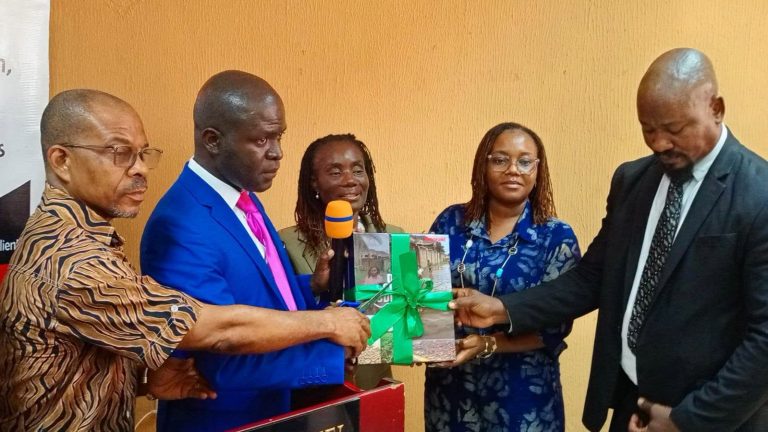
MONROVIA, Liberia, August 5, 2026– The Executive Director of the Environmental Protection Agency (EPA) of Liberia has called for stronger domestic accountability and increased international support for climate action, stressing that climate finance must not become another source of debt for vulnerable developing countries.
Speaking at the launch of the ActionAid Climate Debt Audit Report on Wednesday, August 5, 2026, in Monrovia, Dr. Yarkpawolo underscored the urgent need for climate justice, emphasizing that climate change is no longer solely an environmental concern but also a security, human rights, and development challenge.
Addressing government officials, development partners, civil society organizations, and other stakeholders, the EPA Executive Director noted that rising temperatures, changing rainfall patterns, and increasingly frequent natural disasters continue to threaten lives, livelihoods, infrastructure, and national development, particularly in vulnerable countries such as Liberia.
He explained that every climate-related disaster diverts limited public resources from essential sectors such as education, healthcare, agriculture, and energy toward emergency response and recovery, thereby slowing economic growth and increasing poverty.
He reaffirmed the principle of common but differentiated responsibilities and respective capabilities, arguing that while all countries share responsibility for addressing climate change, developed nations bear a greater obligation due to their historical contribution to global greenhouse gas emissions.
According to him, developed countries must fulfill their commitments by providing predictable, adequate, and accessible climate finance for mitigation, adaptation, and addressing loss and damage. He emphasized that countries like Liberia, which have contributed little to global emissions, should not be forced to borrow commercially to recover from climate-related disasters.
The EPA Executive Director also challenged Liberia to strengthen its own systems of governance, stressing that international climate justice must be complemented by domestic accountability. He called for improved public financial management, stronger procurement systems, enhanced transparency, and vigorous anti-corruption measures to ensure that climate funds reach the communities they are intended to benefit.
He further highlighted Liberia’s vast environmental assets, including its forests and coastal ecosystems, describing investments in forest conservation, blue carbon initiatives, ecosystem restoration, sustainable agriculture, and carbon market development as opportunities to protect biodiversity while creating jobs and improving livelihoods.
To strengthen Liberia’s climate response, the EPA Executive Director recommended improving national climate finance management systems, increasing predictable funding for adaptation and loss-and-damage initiatives, expanding direct access to climate finance for local communities, women, and young people, and investing in renewable energy and sustainable waste management.
He used the occasion to urge both developed and developing countries to uphold their respective responsibilities, noting that meaningful climate action requires international solidarity, responsible governance, and wise investment of climate resources.
Meanwhile, ActionAid Liberia Country Director Elizabeth Gbah Johnson praised participants for their active engagement throughout the dialogue and described the discussions as a significant step toward advancing climate justice and sustainable development in Liberia.
Madam Johnson said the event demonstrated the importance of partnership, openness, and shared responsibility in addressing climate change, adding that the conversations would strengthen future collaboration among government, civil society, development partners, and local communities.
She thanked participants, facilitators, advisors, and development partners for their valuable contributions, emphasizing that transparency, accountability, and cooperation remain essential to achieving meaningful climate action.
The ActionAid Liberia Country Director further noted that climate change affects every aspect of society, from families and livelihoods to national development, urging stakeholders to remain committed to transforming dialogue into practical action.
She encouraged continued collaboration at the national, regional, and international levels to build climate resilience and promote sustainable development, while expressing appreciation to all participants for their commitment and support.
The launch of the ActionAid Climate Debt Audit Report is expected to contribute to ongoing national and international discussions on climate justice, climate finance, and the equitable distribution of responsibilities in addressing the global climate crisis.