
Posts Categories
Latest Posts
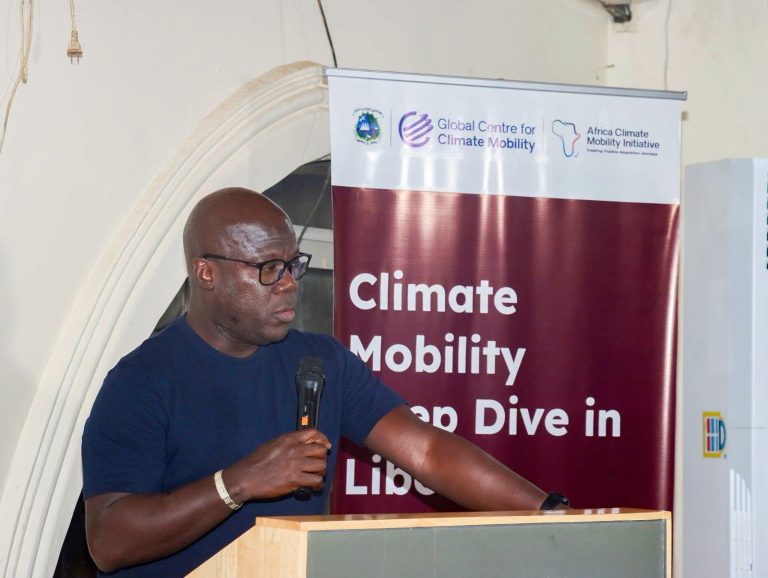
Ganta, Nimba County, Liberia | August 5, 2026 – The Environmental Protection Agency (EPA) of Liberia, in partnership with the Global Center for Climate Mobility (GCCM), today officially commenced the first regional consultation under the Climate Mobility Deep Dive Initiative in Ganta, Nimba County.
The consultation brought together approximately 40 participants representing Nimba, Bong, Lofa, and Grand Gedeh Counties to advance national dialogue on the growing nexus between climate change and human mobility.
The Ganta consultation marks the beginning of a nationwide series of regional consultations designed to generate evidence, strengthen stakeholder engagement, and inform the development of a national Climate Mobility Blueprint for Liberia.
The consultations will continue in Harper, Maryland County on August 7, 2026, followed by a third regional consultation in Monrovia on August 10, 2026. The process will culminate in a High-Level National Policy Dialogue on August 11, 2026, bringing together senior government officials, development partners, academia, civil society organizations, youth and women’s groups, the private sector, and other key stakeholders to discuss policy recommendations and strategic actions on climate mobility.
Delivering the official opening remarks on behalf of the Executive Director/CEO of the EPA, Dr. Emmanuel King Urey Yarkpawolo, Mr. Arthur R.M. Becker, Director of the Department of Multilateral Environmental Agreements (MEAs), emphasized that climate mobility is becoming one of Liberia’s most pressing development and policy challenges as communities increasingly experience floods, changing rainfall patterns, land degradation, biodiversity loss, and other climate-related hazards.
He underscored the importance of integrating climate mobility into national planning processes, including the implementation of Liberia’s National Adaptation Plan (NAP), Nationally Determined Contributions (NDC 3.0), the National Disaster Risk Reduction Strategy, and the ARREST Agenda for Inclusive Development.
Mr. Becker further highlighted that addressing climate mobility requires a whole-of-government and whole-of-society approach, with the voices of affected communities placed at the center of decision-making.
Also delivering opening remarks was Dr. Andrea Milan, Programme Manager of the Global Center for Climate Mobility, who outlined the objectives of the Climate Mobility Deep Dive Initiative and reaffirmed GCCM’s commitment to supporting Liberia in generating evidence-based policies that anticipate climate mobility trends and strengthen climate resilience.
The County Administrator of Nimba County, Mr. Daniel S. Zekpeh welcomed participants to Ganta and commended the EPA and GCCM for selecting Nimba as the host of the inaugural regional consultation.
The regional consultation series will engage stakeholders from twelve counties across Liberia, including Nimba, Bong, Lofa, Grand Gedeh, Rivercess, Margibi, Montserrado, Grand Bassa, Maryland, Grand Kru, River Gee, and Sinoe Counties. Participants include representatives of government ministries and agencies, local authorities, development partners, civil society organizations, academia, youth and women’s organizations, the private sector, researchers, and the media. Together, they will examine current and projected climate mobility trends, identify priority adaptation actions, strengthen partnerships, and contribute to the development of practical policy recommendations that will support climate-resilient development throughout Liberia.
The Climate Mobility Deep Dive Initiative is being implemented under the Memorandum of Understanding (MOU) signed in 2025 between the Government of Liberia, through the Environmental Protection Agency, and the Global Center for Climate Mobility on the margins of the Berlin Climate Mobility Forum, which was attended by Dr. Emmanuel King Urey Yarkpawolo, Executive Director/CEO of the Environmental Protection Agency of Liberia. The partnership seeks to strengthen Liberia’s capacity to anticipate, plan for, and respond to climate mobility through evidence-based policymaking, inclusive stakeholder engagement, and locally driven climate adaptation solutions.