
Posts Categories
Latest Posts
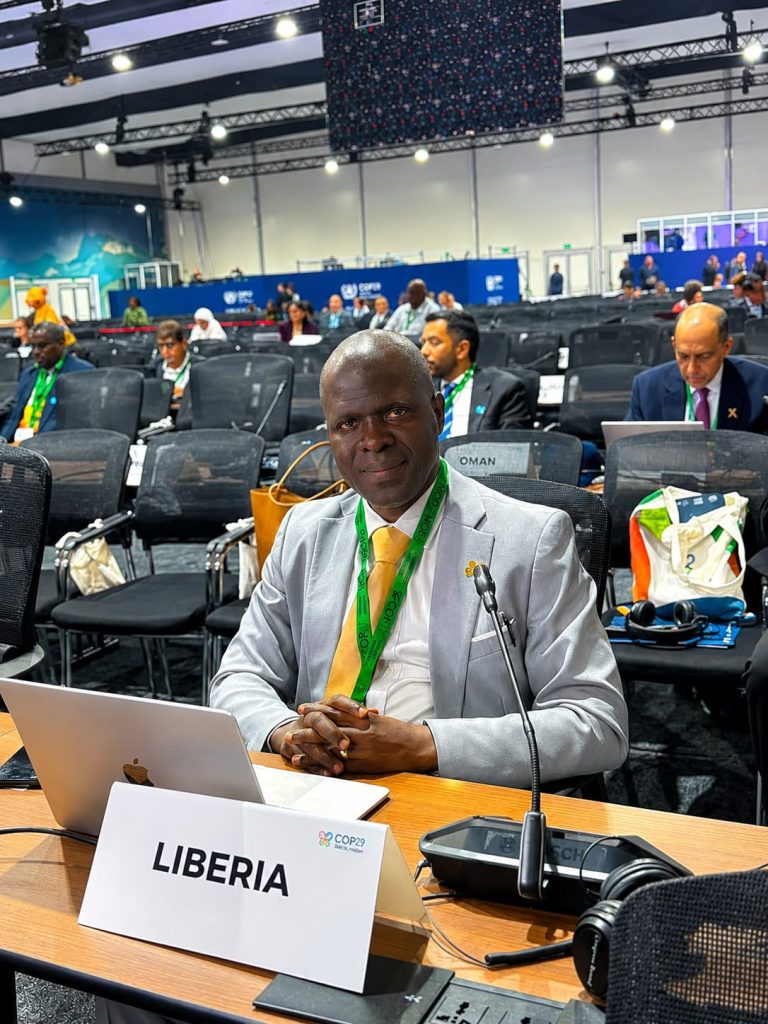
Yerevan, Armenia | October 28, 2026_Liberia has called for stronger regional partnerships, increased international environmental financing, and coordinated action to protect the Upper Guinean Forest Biome, warning that the future of one of West Africa’s most important ecosystems depends on countries working together to address deforestation, biodiversity loss, and the growing impacts of climate change.
The call was made by the Executive Director of the Environmental Protection Agency of Liberia (EPA), Dr. Emmanuel K. Urey Yarkpawolo, during a high-level regional dialogue held on October 27, 2026, at the Global Environment Facility (GEF) Pavilion on the margins of the seventeenth meeting of the Conference of the Parties to the Convention on Biological Diversity (CBD COP17) in Yerevan, Armenia.
Convened by the Republic of Côte d’Ivoire, the dialogue brought together environment ministers and senior government representatives from across the region, alongside international environmental partners, to strengthen cooperation and mobilize long-term financing for the protection and sustainable development of the Guinean Forests Biome.
The meeting brought together eight heads of environment representing Liberia, Côte d’Ivoire, Sierra Leone, Equatorial Guinea, Guinea-Bissau, Nigeria, and Cameroon, while senior representatives from Ghana, Togo, and The Gambia expressed support for advancing the regional initiative. Participants agreed on the need for stronger political commitment, shared responsibility, and practical measures to protect the biome from increasing environmental pressures.
Speaking during the high-level panel, Dr. Yarkpawolo stressed that environmental challenges affecting the region cannot be effectively addressed by individual countries acting alone.
“Biodiversity does not have borders,” he emphasized, calling on countries to move beyond national boundaries and work together to protect ecosystems that support millions of people and contribute to global environmental stability.
He highlighted the growing effects of climate change on regional water systems, noting concerns about drying water sources and the resulting threats to ecosystems, livelihoods, and community well-being.
Dr. Yarkpawolo also drew attention to Liberia’s rich mangrove ecosystems, which play an important role in storing carbon, protecting coastlines, supporting biodiversity, and sustaining communities. He stressed that protecting these ecosystems must form part of a broader regional response to climate change and biodiversity loss.
The EPA Executive Director called for a stronger regional voice to raise the international profile of the Upper Guinean Forest Biome and attract the resources needed to protect it. He noted that the biome provides benefits that extend beyond West Africa, including carbon storage, water regulation, biodiversity conservation, and support for sustainable livelihoods.
He further underscored the importance of international financing institutions, particularly the Global Environment Facility, in helping countries turn their environmental commitments into practical conservation programmes backed by adequate resources.