

Posts Categories
Latest Posts
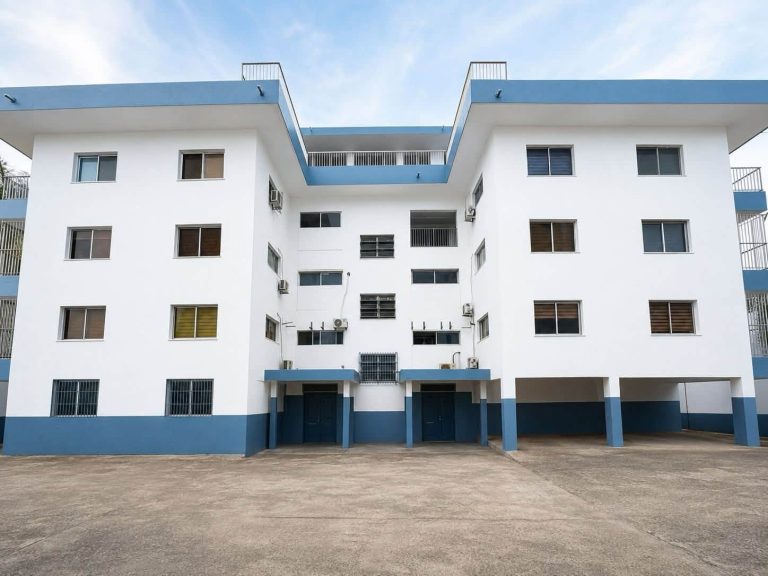
The Environmental Protection Agency (EPA) of Liberia has purchased its headquarters building and the land that hosts its state-of-the-art laboratory, marking a major step toward institutional stability, sound financial management, and improved environmental governance.
The property is located along Sekou Toure Avenue in Mamba Point and covers approximately 1.8 lots. It includes the main EPA headquarters and laboratory facilities, a generator house, a warehouse, a well-fenced compound, parking space, renewable-energy infrastructure, and other supporting assets. The total purchase price was US$800,000, inclusive of applicable taxes and administrative fees.
Notably, EPA acquired the property significantly below its appraised value. After three assessments, the lowest valuation placed the property at approximately US$1.3 million. In practical terms, EPA secured ownership at about US$500,000 less than the lowest assessed market value.
When the current EPA leadership assumed office in early 2024, the Agency was operating from two deteriorated rented buildings on Fourth Street in Sinkor. Those facilities cost approximately US$72,000 annually in rent. For more than 16 years, EPA had occupied the buildings without acquiring ownership, and the premises were no longer adequate for the Agency’s growing responsibilities. They also did not fully meet the environmental, safety, and institutional standards that EPA is mandated to enforce.
Despite inheriting an institution with limited financial resources, EPA’s Senior Management Team, led by Executive Director Dr. Emmanuel K. Urey Yarkpawolo, concluded that continuing to pay rent without building long-term ownership value was not sustainable. After reviewing multiple options, EPA selected one of the twin Bright Buildings in Mamba Point, initially negotiated at an annual rent of US$85,000. Management later calculated that over ten years, EPA would pay approximately US$850,000 and still not own the building.
To resolve this, the Senior Management Team entered negotiations with the property’s seven owners and reached an agreement for a purchase price of US$800,000. The acquisition then proceeded through multiple levels of due diligence and approval. The EPA Board reviewed and approved the acquisition, while the General Services Agency verified the documentation, confirmed that the property was free of encumbrances, and approved the purchase. The Ministry of Finance and Development Planning and the Ministry of Justice also conducted their own financial and legal reviews before granting final approval.
The Agency financed the purchase through savings accumulated from 2024 to 2026. Management reduced administrative spending and controlled operational costs, including lowering some out-of-town daily subsistence allowances below the national rate.
The purchased headquarters provides a functional and modern working environment designed to support the Agency’s mandate. It contains approximately 80 offices, three conference rooms, four reception areas, 24 bathrooms, hallways, a parking yard, a GIS Laboratory, and a library. The site is powered in part by a 60-kilowatt solar system with inverter and battery backup, reducing dependence on generators and improving energy reliability.
The laboratory facilities are equally designed for modern environmental science and evidence-based decision-making. They include a smart conference room with virtual classroom technology, two offices, a workstation room, a waiting area, and three bathrooms. The laboratory is made up of three main laboratories: the Radiation Safety Laboratory, the Water Quality and Marine Laboratory, and the Instrumental Laboratory. These facilities support water testing, pollution investigations, environmental monitoring, research, radiation safety, coastal and marine studies, and strengthened regulatory actions grounded in reliable scientific results.
This acquisition allows Government to replace continuous rental payments with the ownership of a valuable public asset. It also shields EPA from future rent increases, lease disputes, and the loss of money invested in improving privately owned buildings. Most importantly, the property provides Liberia with a permanent environmental headquarters and scientific laboratory that can serve the country for decades.
Ultimately, this transaction demonstrates that disciplined public financial management can transform limited resources into lasting national assets. It is not merely the purchase of a building; it is a long-term investment in environmental protection, scientific capacity, public service, and Liberia’s future.