

MONROVIA, Liberia — August 14, 2026_The Environmental Protection Agency (EPA) has called for increased budgetary support through the Public Sector Investment Plan (PSIP) to enable institutions responsible for Pillar Five of the Government of Liberia’s ARREST Agenda for Inclusive Development—Environmental Sustainability to effectively implement priority projects, strengthen data collection and improve national reporting.
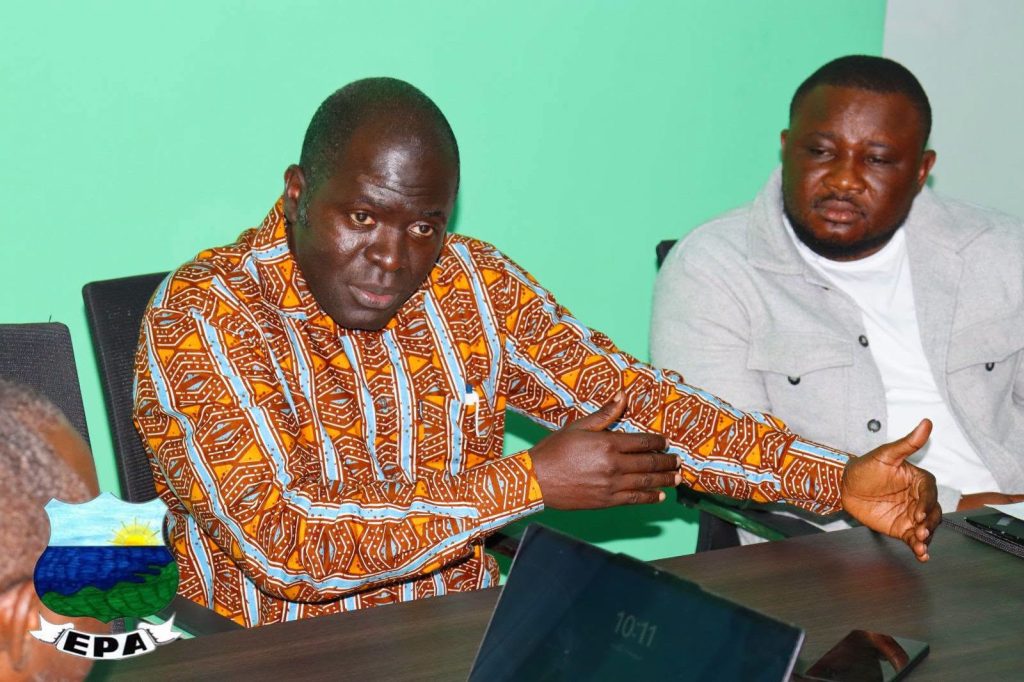
The call was made Friday during a one-day technical meeting on Environmental Reporting, Data Collection, Quality, Timeliness and Completeness, held at the EPA headquarters in Monrovia.
The meeting served as a technical focal point for Pillar Five of the ARREST Agenda, bringing together stakeholders from the environmental sector to review implementation progress, assess the quality and timeliness of sector reporting, identify gaps and determine the investments needed to advance environmental sustainability priorities.
Speaking during the meeting, EPA Executive Director Dr. Emmanuel K. Urey Yarkpawolo stressed the need for environmental institutions to identify priority projects that require government financing and ensure that those projects are properly developed and captured in the national budget through the PSIP.
Dr. Yarkpawolo said institutions under the environmental sustainability pillar must clearly identify the projects they intend to implement, determine which institution is responsible for each intervention and prepare brief project concepts and preliminary cost estimates to support budget advocacy.
“At least today, we should identify PSIP projects. Which institution is responsible?” Dr. Yarkpawolo emphasized, urging participants to move from general discussions to clearly defined projects that can be presented through the national planning and budgeting process.
He said the various project ideas should be consolidated, reviewed and analyzed before being presented to the relevant government authorities.
According to the EPA Executive Director, adequate budgetary support is essential not only for implementing environmental projects but also for enabling institutions to generate the data needed to accurately track progress and report on the country’s environmental commitments and development priorities.
He also encouraged environmental institutions to work closely with officials responsible for preparing budget policy notes to ensure that their priorities are reflected in the government’s planning and financing framework.
Also speaking at the meeting, Assistant Minister for Development Planning at the Ministry of Finance and Development Planning, J. Wellington Barchue, praised the environmental sector for the progress being made and urged institutions to take advantage of existing government planning mechanisms to secure support for priority interventions.
Minister Barchue said environmental institutions should review relevant planning and budget documents and identify projects and interventions that fall within their respective mandates.
He explained that institutions do not necessarily have to wait until projects are fully developed before including them in the planning process.
Instead, he encouraged them to capture viable project ideas in the appropriate government planning templates, allowing the Ministry of Finance and other relevant institutions to further assess, develop and cost the proposals.
Barchue said the process should help the environmental sector determine priority interventions, assign institutional responsibility and develop the concepts and cost estimates required to support budget requests.
He noted that having such information available would strengthen the sector’s position during the Executive Budget Hearing, where competing national priorities are considered for government financing.
The Assistant Minister urged environmental institutions to make full use of the available space within the government’s planning and policy framework to ensure that key environmental interventions are not overlooked during the budgeting process.
Providing an overview of the sector’s performance, Christopher B. Kabah, Director for Planning, Policy and Research at the EPA, said approximately 80 percent of the programs reviewed had commenced implementation, while about six areas had yet to begin.
Kabah said the review was not limited to determining whether activities had started. It also examined the reasons some programs had not commenced and what actions could be taken to move those interventions forward.
He called on institutions to now pay greater attention to implementation timelines, particularly for programs already underway.
“The ones that have started are open. We need to start now to go deeper in terms of timeline. When can we complete that?” Kabah said.
He encouraged stakeholders to maintain the progress already achieved while identifying practical solutions for delayed activities.
Kabah also emphasized the importance of coordination among institutions under the environmental sustainability pillar, warning that unnecessary disagreements and poor coordination can slow implementation.
“Every little confusion is a time stolen away from progress,” he said.
He urged participants to work collectively toward shared objectives, stressing that coordinated institutional efforts are essential to achieving the environmental targets of the ARREST Agenda.
The technical meeting is expected to strengthen the link between environmental data, project implementation, national planning and public financing, while helping institutions under Pillar Five identify projects that require PSIP support.
The process is also intended to improve the sector’s ability to collect reliable data, track implementation, measure results and report accurately on progress under the government’s development agenda.
With environmental sustainability identified as a key pillar of the ARREST Agenda, stakeholders say stronger coordination between environmental institutions and the Ministry of Finance and Development Planning will be critical to ensuring that environmental priorities are translated into funded projects, measurable results and credible national reporting.