
Posts Categories
Latest Posts
MONROVIA, Liberia — August 14, 2026_The Environmental Protection Agency of Liberia (EPA), through its Department of Intersectoral Coordination, has intensified community education on the protection of wetlands, proper waste management and compliance with Liberia’s environmental laws.
The ongoing awareness campaign is being led by Madam Tennema M. Coleman, Assistant Director for Outreach and Training Unit at the EPA, and is aimed at bringing environmental laws closer to communities while encouraging residents to take an active role in protecting their surroundings.
A major focus of the campaign is Part VI, Sections 74 and 75 of the Environment Protection and Management Law (EPML) of Liberia, which specifically address the management, regulation and protection of wetlands and wetland resources.
Section 74 provides that the EPA may prescribe general or specific guidelines and standards for the management of rivers, lakes and wetlands. These include measures to prevent and control soil erosion, conserve vegetation in and around wetlands and other water bodies, prevent and control discharges that may cause pollution, regulate mineral harvesting and promote environmentally friendly tourism.
The provision also calls for County and District Environment Committees to identify rivers, lakes and wetlands that are valuable to local communities or are at risk of environmental degradation and take appropriate measures to minimize such risks.
Section 75 provides for the protection of rivers, lakes and wetlands, requiring the EPA, in consultation with relevant government institutions, to issue guidelines and prescribe measures for their protection. The law prohibits activities that could damage these ecosystems, including the construction of structures in or around their beds, excavation or disturbance, depositing substances likely to cause adverse environmental effects, blocking or diverting their natural course and draining wetlands.
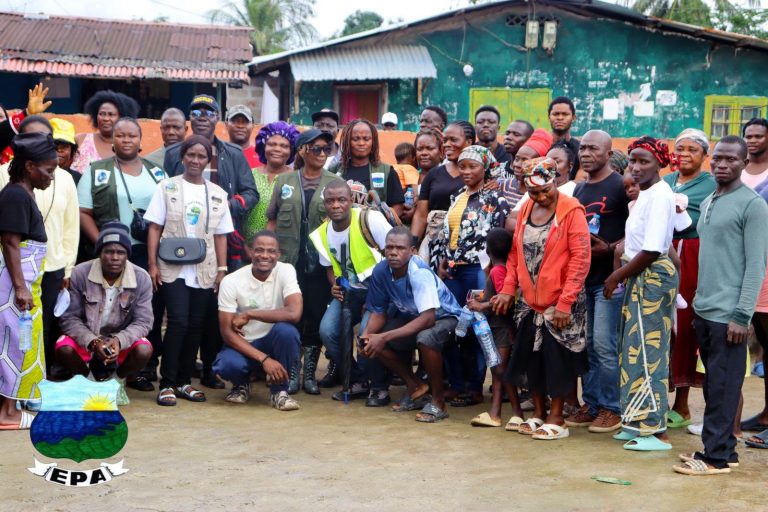
Against this legal background, the EPA team has been taking the awareness campaign directly to communities across Montserrado County.
Last week, the team visited Banjor and Swamp View communities in District #17, where residents were engaged on environmental issues affecting their communities and educated on the importance of protecting wetlands.
On Thursday, August 13, 2026, the team continued its outreach with a visit to the Seekey Community along Du-Port Road, where residents participated in discussions on environmental protection, wetland conservation and waste management.
The campaign continued today, August 14, 2026, with the team visiting the Red Hill Field Community in District #17.
During the engagements, residents have been given the opportunity to share some of the environmental challenges confronting their communities. The EPA team, meanwhile, has explained the dangers associated with the destruction and degradation of wetlands.
The team highlighted that wetlands perform important environmental functions, including helping to control excess water and flooding, supporting biodiversity and contributing to the protection of water resources. Their destruction through uncontrolled construction, dumping, drainage and other activities can undermine these functions and expose communities to increased environmental risks.
Waste disposal and management have also formed a key part of the community discussions.
The EPA team has educated residents on relevant provisions of the EPML, including Section 62, which prohibits the dumping, discarding or leaving of litter on land, coastal zones, water surfaces, streets, roads and other places accessible to the public, except in designated containers or places provided for waste disposal.
The team also highlighted Section 64, which addresses licensing requirements for waste disposal sites and facilities and requires measures to minimize waste through treatment, recycling and other appropriate methods.
Residents were encouraged to avoid disposing of waste in wetlands, waterways, drainage channels and other environmentally sensitive areas, noting that improper waste disposal can contribute to pollution, flooding and the degradation of natural ecosystems.
The engagement also provided an opportunity for the EPA to hear directly from residents about how waste is managed within their communities, including the challenges they face in properly collecting and disposing of waste.
Madam Coleman and members of the team emphasized that protecting Liberia’s environment requires active participation from communities, noting that government efforts can only succeed when residents understand environmental laws and take responsibility for their environmental practices.
The EPA plans to continue the community outreach in other parts of Montserrado County in the coming days, as the Agency seeks to strengthen public awareness of environmental laws, promote responsible waste management and encourage greater community action to protect wetlands and other natural resources.