
Posts Categories
Latest Posts
MONROVIA, Liberia, August 31, 2026 — The Environmental Protection Agency of Liberia (EPA) has imposed a US$400,000 administrative fine on ArcelorMittal Liberia (AML) and ordered the company to pay an additional US$100,000 to the Agency following reported environmental pollution and regulatory violations associated with its mining operations in Nimba County.
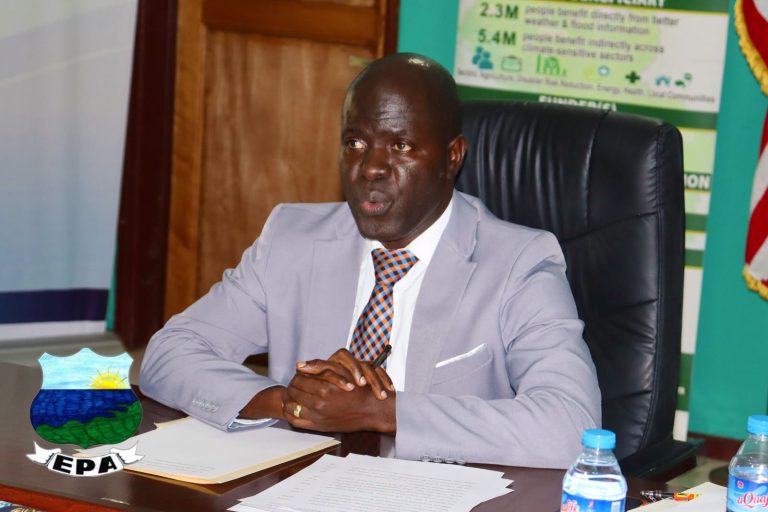
The measures were announced by EPA Executive Director Dr. Emmanuel K. Urey Yarkpawolo, who read the Agency’s press statement during a press engagement at the EPA headquarters in Monrovia Monday, August 31.
According to Dr. Yarkpawolo, the EPA’s decision followed a formal complaint filed on August 11, 2026, by residents of Bolo Town, Gba Clan, Yarmein Administrative District, Nimba County, alleging serious pollution of community water sources, damage to crops, and impacts on livelihoods linked to AML’s mining operations around Mount Gangra and Mount Yulleton.
He said the EPA responded promptly by dispatching a preliminary investigation team to the affected area on August 13, 2026, where the team inspected watercourses and farmlands, engaged AML’s environmental management team, and consulted with traditional leaders, women, youths, elders, community representatives, and persons with disabilities.
“The preliminary investigation found visible evidence that substantially supported the community’s complaint,” Dr. Yarkpawolo said.
He explained that EPA investigators observed iron-rich, sediment-laden discharges from mining areas at Mount Gangra and Mount Yulleton entering nearby water resources through six discharge points.
Mining-related sediment was also observed in the Karn River and 11 creeks identified by community members, including Yeewaa, Wenein, Neneyee, Ponpeles, Wehee, Sayemeyee, and Yeehwaatoluzah.
The EPA Executive Director further said the investigation found damage to vegetation and impacts on farmlands used by residents to cultivate rubber, cocoa, oranges, rice, and other crops.
According to him, the situation is particularly serious because the affected water sources and farmlands are directly connected to the communities’ health, food security, and livelihoods.
“These findings are especially serious because the affected water resources and farmlands are directly connected to the health, food security, and economic survival of the surrounding communities,” Dr. Yarkpawolo emphasized.
Dr. Yarkpawolo said the EPA’s review also established regulatory failures on the part of ArcelorMittal Liberia.
He explained that AML failed to notify the EPA of the reported pollution incidents as required by the conditions of its environmental permit.
He added that the company also failed to submit its mandatory Environmental Monitoring Report for the second quarter of 2026 within the required period.
According to Dr. Yarkpawolo, the EPA engaged AML through conferences and written communications and provided a final compliance deadline of August 25, 2026, but the outstanding violations were not satisfactorily addressed.
“Despite conferences, written communications, and a final compliance deadline of August 25, 2026, the outstanding violations were not satisfactorily addressed,” he said.
As a result of the regulatory action, the EPA has imposed an administrative fine of US$400,000 on AML.
Dr. Yarkpawolo said the amount must be paid into the Government of Liberia Consolidated Account through the Liberia Revenue Authority within 10 working days.
In addition, AML is required to pay US$100,000 to the Environmental Protection Agency within 10 working days.
He said the additional US$100,000 will support further monitoring, sampling, technical research, and environmental assessment necessary to determine the extent and trend of the reported pollution and guide restoration measures.
Together, the two payments amount to US$500,000, although the EPA clarified that the US$100,000 is separate from the administrative fine.
Dr. Yarkpawolo also announced that AML must fully fund a comprehensive environmental assessment to be led by the EPA.
The assessment will determine the geographic extent and severity of the reported pollution and its impacts on water resources, farmlands, livelihoods, vegetation, and the wider landscape.
He said that based on the verified results, AML will be required to compensate affected persons and communities for documented crop and livelihood losses, in accordance with applicable law.
The company has also been ordered to provide safe alternative water for immediate community use and support appropriate interim livelihood measures while the assessment and restoration process are ongoing.
Dr. Yarkpawolo cautioned that payment of the fine and additional assessment funds does not release AML from its other environmental obligations.
“Payment of these amounts does not relieve AML of its continuing obligations under the Environmental Protection and Management Law, its environmental permits, or any other applicable laws and regulations,” he said.
He added that following further monitoring and assessment, the EPA may issue an Environmental Restoration Order specifying additional remedial and restorative measures.
While announcing the enforcement action, Dr. Yarkpawolo stressed that the EPA recognizes the importance of responsible investment and the contribution of concessionaires to Liberia’s development.
He noted that mining and other concession activities contribute to employment, infrastructure, public revenue, and economic development.
However, he maintained that such investments must not come at the expense of communities or the environment.
“No investment can be considered sustainable when communities bear avoidable environmental costs or when permit conditions are disregarded,” Dr. Yarkpawolo said.
He stressed that the EPA’s approach is “firm, fair, and consistent,” explaining that the Agency will acknowledge companies that take corrective action while enforcing the law when environmental harm and regulatory violations are established.
Dr. Yarkpawolo also acknowledged corrective measures recently undertaken by AML at its Buchanan facility in Grand Bassa County.
He said that during a nationwide environmental monitoring and compliance-enforcement exercise conducted in early May, EPA technical teams identified concerns at the facility, including improper disposal of waste and poorly structured sedimentation ponds.
Following the findings, the EPA communicated corrective measures to AML and required the company to bring its operations into compliance with environmental laws and permit conditions.
According to Dr. Yarkpawolo, the company has since taken corrective action and is complying with the measures communicated by the EPA.
He said the development demonstrates that the EPA’s objective is not simply to penalize companies but to ensure that environmental violations are corrected and compliance is sustained.
“Environmental regulation must not only identify violations; it must also secure timely correction and sustained compliance,” Dr. Yarkpawolo said.
The EPA Executive Director warned industrial and concession operators across Liberia to comply with environmental laws and permit conditions.
“Protect the environment, respect the law, comply with your permits, and honor the communities in which you operate,” he cautioned.
He reaffirmed the EPA’s commitment to working constructively with investors and businesses while making clear that the Agency “will not compromise the health, safety, and livelihood of the Liberian people.”